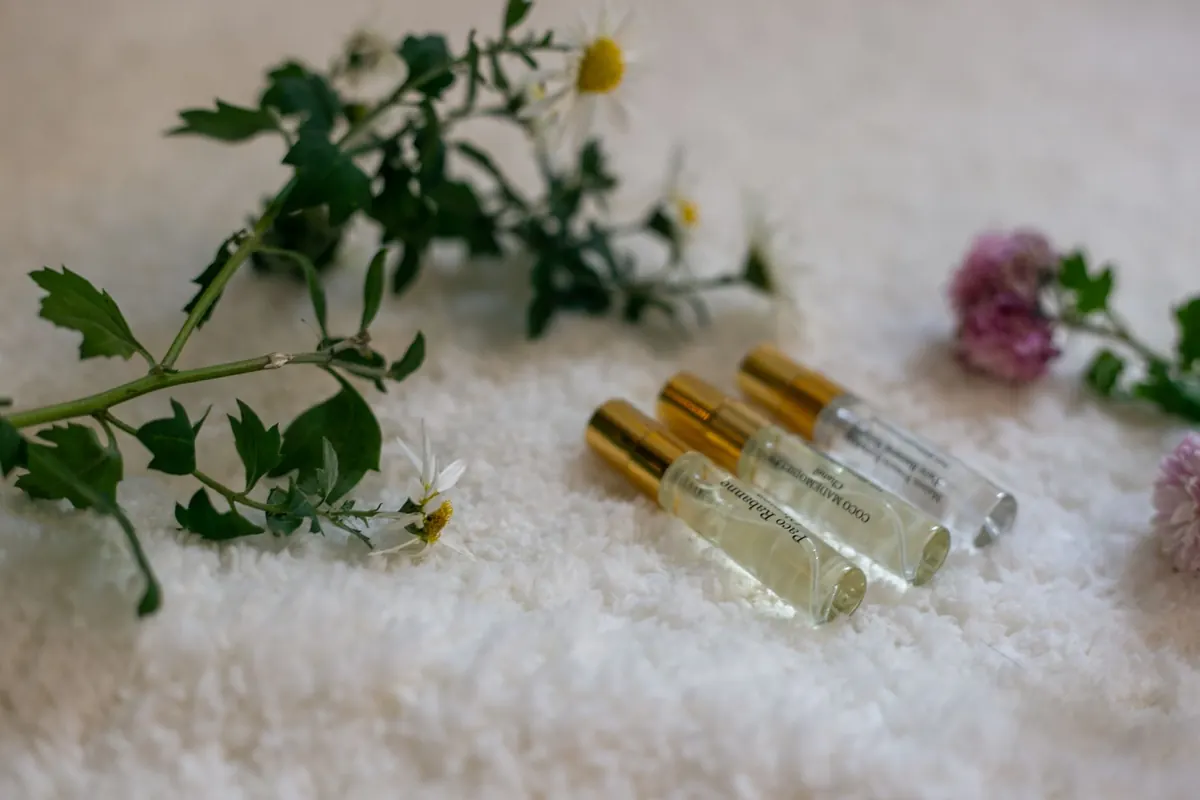
Most of us own a shelf of half-used bottles: the citrus cologne that vanishes by lunch, the heavy vanilla that feels like too much for a Tuesday, the pretty floral that's just a little thin on its own. Layered well, those same bottles become better than any single one of them.
Fragrance layering is simply wearing more than one scented product on purpose, in an order that lets them support each other instead of arguing. It's how you stretch a summer cologne into October, soften an over-eager gourmand, or land on a signature scent nobody can quite place.
Every fragrance is built from notes that evaporate at different speeds. Citrus and light fruit show up first, florals and spices sit in the middle, and woods, resins, vanilla and musk hang around underneath. When you layer, you're stacking those levels, giving a fleeting top note something to hold onto.
That's why a thin cologne sprayed over a woody lotion smells richer and lasts longer than the same cologne on bare skin. You haven't rewritten the scent so much as given it a floor.
Layering fails when two loud fragrances both want to be the main character. Two heavy ambers, two boozy vanillas, two spice bombs — that's how you get a flat, sweet blur. The fix is almost always to make one scent the star and the other a supporting player, either softer or applied in a smaller amount.
Think of a layered scent as three jobs rather than three products.
Something creamy, oily or musky that stays close to the skin: a body lotion, a body butter, a perfume oil, or a woody eau de parfum. This is the foundation. Apply it first, on the chest and pulse points at minimum, and give it a minute to settle.
The fragrance you actually want people to notice. Two to four sprays, usually on skin. Warm areas — wrists, throat, behind the ears, inner elbows — push a scent outward.
A lightweight body mist, hair mist, or fresh cologne spritzed on the shoulders and back of the neck, or sprayed into the air to walk through. This is the part that drifts. It's also the layer you can top up during the day without smelling like you bathed in perfume. If you're spraying your hair, use a product made for hair rather than your regular fragrance, which can leave it dry.
The safest pairings share a note. Vanilla with sandalwood. Rose with patchouli. Coconut with citrus. If two fragrances have one ingredient in common — vanilla, musk, bergamot, cedar, jasmine, amber — they'll almost always sit together.
When you want contrast, keep it to one axis. Bright against dark works: a sharp grapefruit or green tea over a smoky vetiver, or crisp neroli over warm amber. What rarely works is contrast in every direction at once, sweet and sour and smoky and green.
A few ground rules worth keeping:
Layer from thickest to thinnest: lotion, then oil, then perfume, then mist. Creams and oils need a moment to absorb; spraying perfume onto a slick layer of lotion makes it slide rather than settle.
Then wait. Alcohol needs to burn off before you judge anything — around ten to fifteen minutes on skin. What you smell in the first thirty seconds is mostly alcohol and the loudest top notes. Give it an hour before deciding whether a combination worked.
Apply to skin, not just clothing. Fabric holds scent beautifully and can extend a cologne, but it also holds it flat, and some fabrics — silk, leather, anything delicate — can stain. If you do spray clothes, keep it to the inside of a collar or a scarf, and test on a hem first.
Reapply the halo, not the base. Topping up a heavy base layer through the day is how a lovely scent becomes a headache.
Two common problems. The first is mud: everything blurs into one sweet, shapeless cloud. That's almost always too many heavy notes and too much product. Strip back to one eau de parfum plus a lotion and rebuild from there.
The second is a clash that only shows up an hour in. Citrus over heavy leather, for example, can smell fine at first and odd later. If you're testing something new, do it on a day when you're not going anywhere important.
One practical note: fragrance is a topical product, and skin can react. If you're prone to sensitivity, eczema or allergies, patch test new products on a small patch of inner arm first and keep layers away from broken skin. Irritation that doesn't settle is worth a word with a pharmacist or dermatologist rather than another experiment.
Keep it simple for the first few tries.
Write down the combinations that worked. A note in your phone is enough — the scent you invented on a Tuesday morning is impossible to remember accurately by Saturday.
Photo: T. Zhuravel / Pexels

A step-by-step holiday party makeup checklist covering skin prep, base and eye techniques, setting layers, and the...
Eye creams aren't essential for everyone, but they can earn their spot. Here's how to tell whether your face...
A practical seasonal guide to moving your body care from lightweight summer formulas to richer autumn hydration,...


British charm meets modern beauty..
